Saturday, 27 April 2013

The Taming of the Shrew and Twelfth Night - Propeller Theatre Company


If you’re one of those people who think a Shakespeare comedy isn’t funny, then you’ve clearly never seen one performed by the Propeller Theatre Company.

Recently I had the opportunity to see Propeller’s latest productions of The Taming of the Shrew and Twelfth Night at the Lowry Theatre in Salford and can honestly say that I can’t remember when I had enjoyed theatre so much. The energy and enthusiasm the cast invest into each scene had the audience in stitches from the opening scenes and held them captive until the end.

Propeller is an all-male theatre company formed back in the late 1990s under the direction of Ed Hall. They are renowned for the way in which they bring Shakespeare’s plays to life, offering a very modern take on such stalwart classics, making them both entertaining and enjoyable but also thought-provoking and comparable to society today. This year, their performances of Twelfth Night and The Taming of the Shrew proved no exception. The liveliness and fast-paced delivery of the lines directed to the other performers as well as the audience created an informal atmosphere which drew the audience into each scene.


Once you get used to the language style, it is easy to get caught up in the stories being played out before you. Because of Propeller’s modern approach to each play, you find it easy to relate to the situation and characters and can empathise with them.


This was particularly so in the case of the Taming of the Shrew. At the beginning you admired the feisty character of Kate (Katherine) whilst also sympathising with her father for having such an unruly and headstrong daughter. On the other hand you were drawn to his other daughter Bianca but soon realised that your ideas were about to be tested. As the play progresses, you can see how much is made of Bianca’s beauty and that Kate’s boisterous behaviour is not admired but needs to be tamed. She is then subjected to cruelty and humiliation until she yields to the commands of her husband and becomes almost recognisable as the person we admired in the beginning. The transformation was at times comical but as you thought upon the situation more, you could see how Shakespeare and Propeller were challenging the concepts that beauty is to be admired and wild behaviour and out-spoken characters controlled. They also examine the theme of marrying for love and marrying for money and how sometimes the difference between the two is a very fine line. The cast performed this brilliantly but I particularly enjoyed Vince Leigh and Dan Wheeler as Petruchio and Kate respectively.


In Twelfth Night we see the classic tale of mistaken identities, transformations and deception. It looks at the question of what happens when you fall in love with the wrong person and the answer is often comical and heart wrenching. Having a man play a girl who in the course of the play disguises herself as a boy is also humorous but draws many parallels with situations in society today with people often hiding their sexuality to be accepted by society.  The way that Propeller’s male actors portray the female characters is done so cleverly that like the language, once you get used to it, you often forget about the actor as you are so engaged with the character and the play itself - their speech and movement as well as their facial expressions are so true to the female nature. This production was side-splittingly funny at times but also had some very poignant moments and you felt each of these emotions with the main characters.


I would thoroughly recommend seeing Propeller for yourself, not only will it give you a deeper appreciation and understanding of Shakespeare’s work but will keep you entertained and amused for hours. Be warned though, once you have seen them once, you will want to see them again and again. These were the  5th & 6th productions I have seen by Propeller and I have thoroughly enjoyed every one.


Look out also for the cast performing during the intervals of the shows. This year they are raising money for Target Ovarian Cancer and invite donations to be made through their just giving page www.justgiving.com/Propeller13.


For more details of Propeller’s current productions and tour dates see http://propeller.org.uk/current-productions

Saturday, 23 March 2013

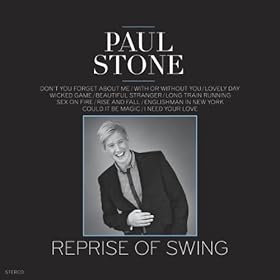
Review: Paul Stone - Reprise of Swing

It’s likely that you may not have heard of this guy before now, but the way things are going for Paul Stone, it won’t be long before his name is as familiar as some of the singers he pays tribute to with the release of his debut album Reprise of Swing.


Yorkshire based Paul, a former student at Leeds College of Music is currently touring the globe withhis 11-piece orchestra, bringing back the sound of Swing with that big band style in his own inimitable way. He’s appeared on local and national radio and also performed at a charity gala concert with pop legends The Osmonds last year.  His debut album, Reprise of Swing had a limited release just before Christmas 2012 but has just been released globally through itunes this month. 

Paul learned to love music at an early age and by the time he was 14yrs old, could play the piano, the violin and drums. He enjoys performing and for many years has entertained  as a solo artist or with his band at corporate events, charity nights and on cruise liners. He saw the way that his style of Swing appealed to the audiences and so set out to record his own album.  He has a fresh faced look with a smile that would rival a Cheshire cat. His voice and personality are well suited to Swing and it is impossible to see him perform without feeling upbeat, such is the energy and enthusiasm he exudes in his performance. I have known Paul for quite a few years now, having first met him when he sang as part of the duo Stone & King. I don't think he's aged a day since I last saw him and his positive attitude and cheerful disposition are quite contagious, you can't help but be happy when you're around him.


Reprise of Swing includes many well known and much loved favourites from both rock and pop genres, but with that added “Swing”. The songs included on the album work surprisingly well with this new sound and although I had been a bit dubious when I first read the track listing, I have to admit that the arrangements flow smoothly and give each song a new appeal.  That big band style  sound possesses quite a nostalgic feel with the cheerful and optimistic beat giving even the more sombre songs like With or Without You a positive feel.

 Watch Paul Stone live at Lakeside


 Album Tracklist
1.Don't You Forget About Me    
2.With or Without You
3.Lovely Day
4.Wicked Game
5.Beautiful Stranger
6.Long Train Running
7.Sex On Fire
8.Rise and Fall
9.Englishman in New York
10.Could It Be Magic
11.I Need Your Love
12.On the Road Again


I would find it hard to pick one favourite from amongst the tracks on offer but do have A Lovely Day, Long Train Running, An Englishman in New York and I Need Your Love on repeat on my ipod quite regularly.

To find out more about Paul Stone and his music click on one of the links below or order his album through Amazon, iTunes or Linn Records
Paul Stone Official Website
Paul Stone Twitter
Paul Stone Official Facebook Page

Remember in music, “It don’t mean a thing if it ain’t got that swing!”

Sunday, 10 March 2013

Review: Doctor Faustus - West Yorkshire Playhouse


Tired with the pursuit of knowledge through more conventional means and a desire for fame, fortune and glory, Doctor Faustus makes a pact with Lucifer that he will trade his soul in return for 24 years of service by the devil Mephistopheles. Despite warnings from Mephistopheles about what it feels like to fall from the grace of God and live a life of eternal misery and servitude, Faustus signs the pact.


He soon enjoys all that his pact has to offer in terms of notoriety, fame, women and others who he can manipulate at will. He occasionally suffers bouts of consciousness and feelings of guilt where he questions what he is doing. By this time, he has fallen too far and at the end of the 24yrs realises all too late what his fate will be as the devil comes to claim his soul for Lucifer.

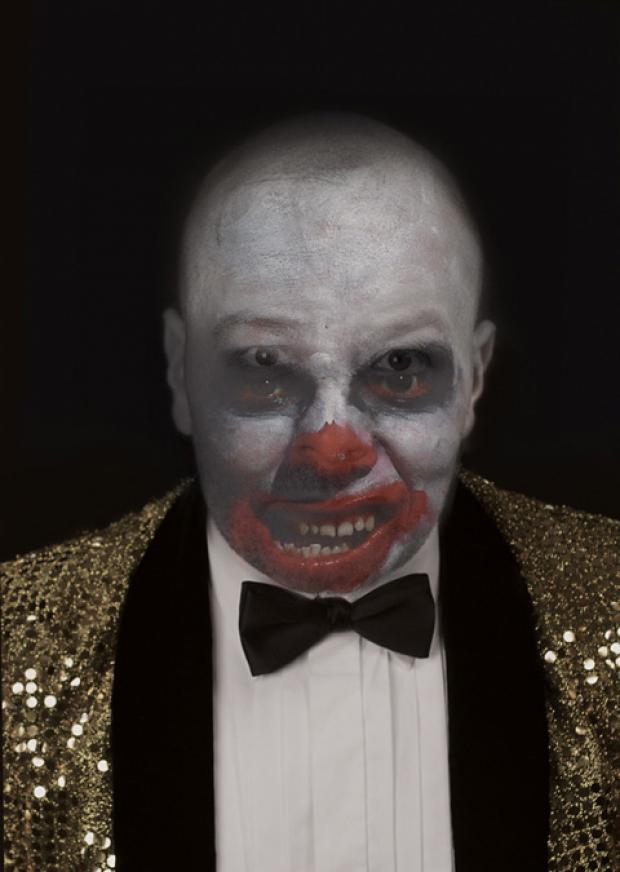
Doctor Faustus was written in the late 1590s and initially published in 1604 under the title The Tragicall History of D. Faustus; however the themes in it are still as prevalent today as they were then. Currently showing at the West Yorkshire Playhouse in Leeds, I wouldn’t say this was a play to go and see if you want to be entertained. The dark themes explored in this play certainly give way to reflection and contemplation but with the exception of a few lighter moments in this modern day adaptation; Doctor Faustus is both dark and disturbing.

I had seen the play before but in a more traditional setting. This adaptation by Colin Teevan was cleverly written and you could see many parallels to the world today. The desire for power, wealth and popularity are still present in society today and whilst people may not go to such extremes to get them you might say that in the pursuit of them they lose sight of what they have.

Overall I found the play quite disturbing, which being the aim, I think, it was achieved with ease. Several scenes such as the appearance of the seven deadly sins were quite unsettling although the costume and make up departments had clearly excelled in their work. The use of the stage as both the main stage for performance and as a side stage dressing and changing area meant that you not only got to see the physical changes the characters went through but also the emotional and mental changes – a more subtle method of contemplation perhaps.


I thought that Siobhan Redmond really surpassed the other cast members in her portrayal of Mephistopheles. She was witty and funny, grave and intimidating. Through the delivery of her lines, she gave you the most to think about and examine about the play as a whole and the other characters. She held the audience’s attention whenever she was on stage and the applause she received at the end was entirely justified.


There was the opportunity to attend a post show talk with the co-writer Colin Teevan. Christopher Marlowe sent his apologies although this being Faustus, they might at least have tried to conjure him up – at what cost though?

Thanks to West Yorkshire Playhouse and Culture Vultures for a very thought provoking evening. I’m glad to say I didn’t have nightmares afterwards!

Doctor Faustus is running until 16th March. For more information and to book tickets go to www.wyp.org.uk

Sunday, 3 March 2013

Yinka Shonibare MBE - Fabric-ation

Yorkshire Sculpture Park 02March – 01Sept 2013.


This week I had the opportunity to attend a blogger’s event arranged by the lovely Emma Bearman  (www.theculturevulture.co.uk/blog) at Yorkshire Sculpture Park to preview the new exhibition for Yinka Shonibare MBE. I didn’t think I was familiar with his work until I did some research and saw that he had previously had a piece of work displayed on the 4th plinth at Trafalgar Square, a piece that I had seen and photographed on many occasions.


We were greeted at the park by YSP deputy curator Sarah Coulson, who led us through the exhibition, explaining more about each piece and the inspiration behind it as well as a brief biography of the artist himself, Yinka Shonibare.

Yinka was born in London in 1962 to Nigerian parents. He returned to Lagos aged three and remained there until his teens when he returned to London to study art.  In his work, Yinka often challenges the misconceptions that people have whether it is about a certain place or period in history.

The exhibition is set out over several rooms in the underground gallery with a couple of pieces also outside, although at the time of our visit it was a little too dark to see and appreciate these works. The pieces within the gallery though were very colourful and eye catching and engaged you immediately so that you wanted to study them in more detail.

What I liked about the exhibition and Yinka’s work is that it can be enjoyed on many levels and by people of all ages. Firstly, with every piece, you instantly notice the use of colour and bold prints on the fabric which are quite beautiful. However as you study each piece in more detail you are drawn into it and become aware of the other themes that are being explored. In many instances there seemed to be a reference to childhood, whether it was the size of the sculptures or the children’s toys used as part of them. These prompted me to think of how children often have more simplistic and fantastical views of things and yet are also blatantly honest in what they see - something which as adults we often fail to see.
Black Gold - photo from www.yinkashonibarembe.co.uk


I had many favourite pieces amongst the collection including: New York Toy Painting, consisting of many painted globes each adorned with figurines representing something traditionally associated with America or New York; Black – Gold a large piece of artwork adorning one wall which looks like a splash of oil with several smaller circles inside. It tells how Nigeria has been one of the main oil producers since the 1980’s with 80% of its exports being in oil yielding high values to government revenue. But Nigeria is also a place rife with corruption and the production of oil also raises many environmental issues. Despite all the wealth produced from the export of this oil, it is of little benefit to the Nigerian people; Alien Family, fabric sculptures that were bright, colourful and rather cute to look at but riding on flying machines that looked like they were designed by Leonardo da Vinci rather than the hi-tech spaceships you would expect.

Dysfunctional Family - photo from www.yinkashonibarembe.co.uk
 

I also enjoyed the room that seemed entirely devoted to Lord Nelson – from the brightly coloured cannon made as replica from HMS Victory to the paintings copied from old masters and imposed with a dying Nelson and other characters such as women and people from different nationalities that you might not have expected to see around the time of Nelson. However, if you study Nelson’s column in Trafalgar Square you will see at the bottom of the plinth 4 carvings from scenes on HMS Victory. One of them portrays how they were 19 different nationalities on board with Nelson, so what might have seemed artistic licence by many was actually correct.

My favourite piece though was the ballerina on a cloud. Like many of Yinka’s sculptures, the ballerina is headless and the skin tone used makes it impossible to identify a nationality. What immediately stood out for me was how beautiful and graceful the ballerina was, posed whilst dancing en Pointe with her arms stretched out either side of her. The attention to the detail of her leg and arm muscles was incredibly lifelike and the colours of her tutu and shoes all added to the aesthetics of the piece. Whilst you are busy admiring all of this, you perhaps don’t notice that the cloud she is dancing on is actually a black mushroom cloud. What Yinka alludes to here is that the ballerina is representative of the higher echelons of society who are so removed from reality that they are stood on a cloud and unaware of what is going on around them.
Flower Cloud - photo from www.yinkashonibarembe.com


Of the exhibitions I have been to, I found this to be one of the most enjoyable, not just because each piece was so visually captivating but because you are drawn in to study in greater detail and get to appreciate the thoughts and themes behind each work. Each piece challenges your initial perceptions leaving you with much to ponder over and talk about afterwards. I would thoroughly recommend a visit to this exhibition.

Thanks to Emma Bearman from www.theculturevulture.co.uk for organising the event and to Sarah Coulson for a fascinating insight into Yinka's work.

For more information on the artist http://www.yinkashonibarembe.com/
For information on Yorkshire Sculpture Park http://www.ysp.co.uk/

To read more about cultural events in the Yorkshire area http://www.theculturevulture.co.uk/blog

Saturday, 3 November 2012

Julius Caesar - RSC


Late September, I had the opportunity to see not one, but two Shakespeare plays; Macbeth at the Crucible Theatre in Sheffield and Julius Caesar at The Alhambra Theatre in Bradford. Both were enjoyable in their own way, but my favourite by far was the RSC production of Julius Caesar, the on stage drama was gripping and the drama continued into the interval with a set malfunction adding to the intensity.


Set in Africa, the production was captivating from start to finish. I had initially wondered how it would translate to being set in Africa but have to admit it worked exceptionally well. The cast was made up from many well known actors who will have been familiar to many from their previous work in film and television and this had been part of the appeal for me to see the play. It was not a play I had studied or seen before so I made sure I read up on it before going to see it and was impressed by the reviews that I had seen.


The acting throughout was incredible, the famous soliloquies were exceptional and really captured the mood of the play. The entire cast gave outstanding performances but the real drama came from Paterson Joseph as Brutus and Ray Fearon as Mark Anthony.


The interval had a drama of its own when the safety curtain refused to raise at the end. The stage manager, theatre manager and RSC manager all came out to apologise for the delay which then turned into a cancellation. Everyone was offered a refund or the chance to see the evening performance. Someone asked if the cast might come out into the stalls area so that we could applaud their performances so far. In good nature they all came out and took bows and chatted to the audience at the front of the stalls. As they took their final bows, the safety curtain suddenly rose like a phoenix from the ashes and the RSC manager told a now delighted audience that the show would go on.

The second act seemed just as gripping and I was glad I hadn’t left early like so many others. Mark Anthony’s speech “Friends, Romans, Countrymen” was so powerful that he really brought the text to life. I wish I had seen productions like this when I studied Shakespeare at school as it really brought out the feeling and emotion of the piece.


At the end of the performance, the actors all came on stage to take their bows and applauded the audience for staying with them. It was a fantastic production and I dearly hope it gets released on DVD in the future.

Chatsworth House

Many years ago I visited Chatsworth House but perhaps didn’t appreciate what a magnificent place it was at the time.


Over the years I have seen it appear in many well-known films and television programmes and after visiting nearby Hardwick Hall and learning a little more of their combined histories I was determined to see it again.

In August I met up with my friend Lyndsey and we spent a full day exploring the many wonders of the place.


There was so much to see and do, it would have been better to spend a couple of days there and after
seeing just a fraction of the property I wished I could have stayed overnight.

The House itself is incredible; superb architecture, intricate and ornate carvings and mouldings, rich and opulent colours, magnificent table settings and so many ornaments and paintings that each room was a wonder to behold. One of my favourite places within the house was the library – a long gallery filled with books on every side and featuring a beautiful portrait of Henry VIII and the exquisite sculpture by Rafaelle Monti The Veiled Lady.


One of my main reasons for wishing to come to Chatsworth was to see this sculpture. I remember seeing it in the film Pride & Prejudice as the character Elizabeth Bennett walks through the sculpture gallery . The sculpture is so intricately sculpted that you can see the features of the lady’s face despite it having a veil over it. It really is breathtakingly beautiful.

Moving into the sculpture gallery there were also many fine pieces including two large lions that marked the end of the tour and the entrance to one of the gift shops.


Outside there were so many wonders to see you could appreciate why a large family would find so much entertainment in their land. From the majestic Emperor’s waterfall to the maze along with the many gardens, sculptures and ornaments it was impossible to find one place to settle as you just wanted to see more and more and more.....


Sunday, 1 July 2012

Così fan Tutte - Opera Holland Park


Così fan Tutte is one of three operas written by composer Wolfgang Amadeus Mozart and librettist Lorenzo Da Ponte. Written in Italian, it translates as “Thus do all women” or “All women are like that”.  It tells the story of two sisters; Dorabella and Fiordiligi, their lovers Ferrando & Guglielmo and their friend, the old philosopher Don Alfonso.  Following a proclamation made by the young men that the affections of their sweethearts are unwavering, Don Alfonso places a bet with the young men. Given one day and providing the young men do everything he says, he will prove that their sweethearts are fickle (as all women are).

Opera Holland Park’s production of this well- known opera is given a traditional 18th century setting in terms of costumes but with a modern twist in terms of staging. Don Alfonso is the first character we the audience are introduced to and together with the chorus singers (seated on the stage like an audience) are let in on the experiment he is about to conduct. The staging thereafter is reminiscent of a cross between the Truman Show and Big Brother as we watch the main protagonists and the supporting cast caught up in Don Alfonso’s experiment.


I have been to several of Opera Holland Park’s productions and have never been disappointed. The outdoor setting provides a welcome change to a theatre or opera house and has a more intimate feel to it. The cast and chorus are always very strong vocally especially when you consider that like most operas the singers don’t wear microphones and given the outdoor setting have to project their voices in a different way. In this setting you can also see the orchestra which again makes a change from them being in a pit or hidden off stage – you really get to see a full performance in every sense.

Whilst Cosi fan Tutte is not one of my favourite operas (I find the storyline somewhat melodramatic) I was nevertheless eager to see this production by Opera Holland Park. The fact that they always put on operas to such a high standard – and given the fact that my good friend Nick Garrett was performing the role of Don Alfonso added to its appeal. I had read several reviews of the performance before attending and so was anticipating a great performance – I was not disappointed.


The singers all performed to an extremely high standard and were amusing, eloquent and emotional.  Each of the singers performed their solo parts so well that it would be hard to pick out any one as a highlight of the opera .Whilst I could not remember many of the songs from the opera , I did enjoy Soave sia il Vento performed by Don Alfonso, Dorabella and Fiordiligi. There were also several comedy moments – usually involving Don Alfonso and Despina which I thoroughly enjoyed.At times it seemed they were delivering the lyrics with such speed that it became a tongue twister of words which added to the comedic value of the piece

Although the opera did seem quite long at times, I enjoyed the innovative staging and thought that setting it in such a way as to reproduce a big brother sort of feel, gave it a very modern and contemporary twist. I would gladly have seen this production again had it not been for the travel distance from my home and the fact that like Opera Holland Park’s many other productions, it was sold out!


Conductor Thomas Kemp
Director Harry Fehr
Designer Alex Eales
Lighting Designer Colin Grenfell
Fiordiligi Elizabeth Llewellyn
Dorabella Julia Riley
Ferrando Andrew Staples
Guglielmo Dawid Kimberg
Despina Joana Seara
Alfonso Nicholas Garrett
With the City of London Sinfonia and the Opera Holland Park Chorus


For further information on Opera Holland Park and their forthcoming productions see www.operahollandpark.com.


Blake - Love Lifts us Up Tour 2012


Recently I have been delighted to catch up with two of my favourite sets of artists; Blake and Nick Garrett. I have known both for approximately six years and although I’ve not been able to see either of them as much as I’d like lately, this past month I have fortunate enough to see them both.

Ollie Baines, Humphrey Berney, Jules Knight and Stephen Bowman, collectively known as Blake, are currently touring the UK with their Love Lifts us Up Tour. The concert features many of the well-known and best-loved songs from their previous three albums, but also gives us an opportunity to take get a glimpse into the new direction they are going with their forthcoming fourth album.
What I enjoy about Blake’s performances are the incredible harmonies they produce. Whether they are performing a pop song, a ballad or a classical piece, the harmonies have an inimitable quality to them which enhances each of the songs in a different way, emphasizing the beauty and emotion of each piece.

Tracks from their previous albums included; She, Nessun Dorma, Hallelujah, Moon River, Chasing Cars, And So It Goes and God Only Knows, proving that they are equally adept at performing different genres of music both accompanied and a Capella. The choice of songs was also important in that many of the people at the concert were seeing Blake for the first time that evening and so whilst they may have been unfamiliar with the group, the repertoire provided a familiar reassurance. Many members of the audience joined in, encouraged by Blake, particularly in numbers like Up Where We Belong and Jerusalem.

I had been rather sceptical about the direction that the fourth album was headed given that it was to be all original material and more pop based. I have great faith in the musical abilities of the group and so it wasn’t the fact that they were composing songs themselves that worried me but rather that the wonderful harmonies would be lost in the process. I needn’t have worried though as the song Start Over proved, the harmonies are still present and Stephen assured me after the concert, that harmonies will remain very much a trademark part of their music. Start Over is the first song I have heard from their forthcoming album and if the rest of the songs are like this one, then we are really in for a musical treat.


It was also lovely to hear them perform other new material at this concert – new to their repertoire as opposed to new original material. These included the beautiful Billy Joel song Lullaby and the deeply moving Peter Gabriel song Father, Son both of which were sung so expressively that the emotions of each piece combined with the beautiful harmonies made them truly heart-rending. For me, Father, Son which Jules dedicated to those in the audience who had lost a parent really struck a chord in my heart as my father died when I was young. Watching them perform this knowing that Jules had also lost his own father just a year before also added to the poignancy of the piece especially when he sang the words “with my dad by my side”. I am sure that Jules' father would be extremely proud of his son and what he has accomplished and will still be "by his side" watching over him.


What I also enjoy about Blake’s performances is the way they perform as a group – not just vocally but in their support for each other. There’s a real sense of camaraderie when they are together and whilst all their vocal styles and sounds are individual, they all come together to produce an incredible song as a group and no one voice is more predominant than the other. I also still admire the fact that despite numerous tours throughout the UK and abroad and their many successes, they still take the time to meet and greet their fans at the end of their performances and are happy to sign autographs and pose for photos. It’s a sign that they remain grounded and haven’t let the fame change them – something which I know the fans appreciate and love about them.


Blake’s Love Lifts us Up Tour continues throughout the UK at various venues and dates. For more information see their website www.blakeofficial.com or follow them on Twitter www.twitter.com/thebandblake

Saturday, 19 May 2012

Secret London - Part Two

Almost a year ago, I wrote a blog about some of the tourist sites in London that are often overlooked in favour of the more prominent and better known sites. Recently, whilst in London, I embarked on another tour of London to find some more of these hidden treasures.


I was inspired to do this after seeing a programme on Sky Arts 2 about Dickens’ England and from reading The Stories Behind London’s Streets by Peter Thurgood and London by Edward Rutherfurd. I have always had a fascination for the city I was born in and have enjoyed visiting many places in and around this great city but cannot claim to truly know the place.

Dr Samuel Johnson said (quoted in The Stories Behind London’s Streets) “Sir, if you wish to have a just notion of the magnitude of this city, you must not be satisfied with seeing its great streets and squares, but must survey the innumerable little lanes and courts. It is not in the showy evolutions of buildings, but in the multiplicity of human habitations which are crowded together that the wonderful immensity of London consists.”

Behind every street name lies a story about the people who have lived, worked and even died there. Here are just a few of the places I visited and the stories I uncovered.


Bleeding Heart Yard


Bleeding Heart Yard is a cobbled courtyard in the Farringdon area of London. It is mentioned in Charles Dickens’ novel Little Dorrit as being the home of the Plornish Family. “... A place much changed in feature and in fortune, yet with some relish of ancient greatness about it. Two or three mighty stacks of chimneys, and a few large dark rooms which had escaped being walled and subdivided out of the recognition of their old proportions, gave the Yard a character. It was inhabited by poor people, who set up their rest among its faded glories, as Arabs of the desert pitch their tents among the fallen stones of the Pyramids; but there was a family sentimental feeling prevalent in the Yard, that it had a character.
As if the aspiring city had become puffed up in the very ground on which it stood, the ground had so risen about Bleeding Heart Yard that you got into it down a flight of steps which formed no part of the original approach, and got out of it by a low gateway into a maze of shabby streets, which went about and about, tortuously ascending to the level again. At this end of the Yard and over the gateway, was the factory of Daniel Doyce, often heavily beating like a bleeding heart of iron, with the clink of metal upon metal. The opinion of the Yard was divided respecting the derivation of its name. The more practical of its inmates abided by the tradition of a murder; the gentler and more imaginative inhabitants, including the whole of the tender sex, were loyal to the legend of a young lady of former times closely imprisoned in her chamber by a cruel father for remaining true to her own true love, and refusing to marry the suitor he chose for her. The legend related how that the young lady used to be seen up at her window behind the bars, murmuring a love-lorn song of which the burden was, 'Bleeding Heart, Bleeding Heart, bleeding away,' until she died.”

The murder mentioned by Dickens is that of Lady Elizabeth Hatton, the widowed daughter in law of Sir Christopher Hatton, one time consort of Queen Elizabeth I. Legend has it that during her annual winter ball in January 1662, a strange man entered the house and danced with Lady Elizabeth before leading her out into the gardens. The lady was not seen again that night but the following morning her body was found in a corner of the courtyard outside the house. She had been mutilated and the frozen snow was stained with her blood. When she was found, her heart was still pumping blood onto the cobblestones. Who the mysterious man was, no one knows although it is rumoured that he was a prominent European Ambassador. Other stories say that Lady Elizabeth was an unvirtuous woman who had made a pact with the devil but then turned away from him in favour of others. To exact his revenge on her, he had appeared in human form and murdered her.

It is said to this day that Lady Elizabeth’s ghost still returns to the cobbled street to remove all traces of blood from the street – now called Bleeding Heart Yard.


Saffron Hill


Bleeding Heart Yard lies between Ely Place and Saffron Hill in London – an area which has changed considerably over the years. During the 18th and 19th Centuries Saffron Hill became renowned for its brothels and vagabonds. The Fleet River once ran where Farringdon road is now and provided a great means of escape for villains pursued by the law. Charles Dickens lived nearby and used Saffron Hill (and Street) as Fagin’s lair in his novel Oliver Twist; it is also mentioned in Sir Arthur Conan Doyle’s story The Adventure of the Six Napoleons as the home of the Venucci family.


The One Tun Pub located on Saffron Hill (so called because of the saffron that used to grow on the estate there) was often frequented by Charles Dickens and is mentioned in Oliver Twist by the name of The Three Cripples. The One Tun pub started trading in 1759 and is one of two taverns still trading under that name. The name refers to the size of the largest of the casks used to store the beer and wine, its capacity being four hogsheads or 252 gallons.


Ely Court


If you manage to find this little alleyway, it will take you to the Ye Old Mitre Tavern – a pub which dates back to 1546! It was originally built for the servants of the palace of the Bishops of Ely. The palace was their London base and played host to Henry VIII and Elizabeth I. After the reformation, Elizabeth I forced the bishops to rent some of their land to her courtier Sir Christopher Hatton (whose daughter in law was supposedly murdered in Bleeding Heart yard) and the area became known as Hatton Garden. It is now the centre of London’s diamond and jewellery trade.

The pub and the palace were demolished in 1772 although the pub was later re built. The preserved trunk of a cherry tree in the corner of the front bar marked the boundary of the diocese and the land leased to Sir Christopher Hatton, and legend has it that Elizabeth I danced the maypole around it.

Technically the land around Ely Court and Ely place come under the control of the diocese of Ely in Cambridgeshire and until the last century even the city police had no jurisdiction here.


There is an account that on Saturday 3rd December 1910 two men entered the One Tun Pub in Saffron Hill. They were described as shabbily dressed and soaking wet. The landlord remembered them well for the fact that they barely spoke any English. They stayed for about an hour. That same evening two men were seen trying to break into a nearby jeweller’s shop in Hatton Garden. The police were called and pursued the men to Ely Court and into Ye Olde Mitre Tavern. As the Tavern came under the jurisdiction of the Diocese of Ely, the police returned to their station and called for the Cambridgeshire police. Needless to say, by the time they arrived, the villains were nowhere to be seen.

Ely Place


If you continue down Ely Court, you eventually come to Ely Place where you will find the oldest Catholic Church in Britain. St. Ethelreda’s church dates back to the 13th century and is all that remains of Ely Palace. The church was built by Bishop William de Luda as the chapel of St. Ethelreda in the palace around 1260.


Throughout the years, Ely Place has featured heavily in both historical and fictional accounts. It was in Ely Palace in William Shakespeare’s Richard II that John O Gaunt makes one of his most famous speeches
“This royal throne of kings, this scepter'd isle,
This Earth of majesty, this seat of Mars,
This other Eden, demi-Paradise,
This fortress built by Nature for herself
Against infection and the hand of war,
This blessed plot, this Earth, this realm, this England.”


In Dickens’ book David Copperfield, David visits Ely Place to see his sweetheart Agnes at the home of Mr Waterbrook.

Ely Palace is also mentioned throughout history, particularly during Tudor times. For more information on the history of Ely Place and St. Ethelreda’s church http://www.stetheldreda.com/history.html.

Interestingly, in 1666 as The Great Fire of London swept through the City, the church of St. Ethelreda’s despite being in the path of the fire was saved when the wind changed direction. By the time the fire burnt out, over two-thirds of London had been destroyed – but the church was untouched.

Mediaeval accounts also tell of the strawberry fields and saffron hills which made up the gardens of St. Ethelreda’s and are again mentioned in Shakespeare’s Richard II. To this day, the strawberry fields are still commemorated every year in June with the annual Strawberry Fayre held in Ely Place to raise money for charity.


To be continued...........


Sunday, 6 May 2012

Carousel – Opera North, Press Night, Leeds.


Last night, Opera North and The Grand Theatre in Leeds played host to a group of people it is always important to try and impress – the press. Critics, bloggers and news paper reviewers were amongst the audience to see Opera North’s production of Carousel. Obviously, the review I write for my blog will not have the same readership numbers as a reviewer from a national newspaper, but our views can nevertheless influence the public and whether or not they go and see the show for themselves.


For my part, having had the privilege of attending the sitzprobe for Carousel, I was eager to see the show in its entirety and see the set, the costumes and the music brought together on stage. I felt the same sense of anticipation from amongst my fellow bloggers who had also attended sitzprobe  and from my friend Jenny who I had brought along as my guest – she is also an avid fan of musicals and I thought it would be interesting to get her take on the evening as well.

There’s is something quite comforting about visiting The Grand in Leeds. Like its name suggest it is an impressive theatre; richly and intricately decorated and yet you feel very much at home there. The staff are always very welcoming and having attended quite a few events there, I feel like I am amongst old friends. Having attended sitzprobe and seen the orchestra and singers in a more informal setting, I felt like I was going back to re-visit friends and there were times throughout the evening when I felt an immense sense of pride for them as though watching a family member perform.

The show was everything it was promised to be; colourful, engaging, emotive, beautiful and inspiring. From the costumes to the music, the dancers, the staging, the orchestra, the principals and the chorus, everything came together so beautifully it seemed completely flawless.

I loved so many elements of the staging; the opening was particularly beautiful as the curtain rose to reveal another curtain with the world printed on it. Behind this, on the stage sat a young child and as the lights went up, it gave the appearance that the child was sitting on top of the world, it was so simple and yet so visually captivating. On another occasion spotlights on strips that had been used to illuminate parts  of the stage were bought in and set up in between carousel horses to make the fairground carousel – this too was wonderfully created and added a real feeling of nostalgia for the ride we knew and loved as children.


Another highlight for me was the dancing that appeared throughout the show but particularly during the song June is busting out All Over. The choreography was so well executed that you sat in amazement at how agile this dancers were. They complimented the tone and the feel of the music superbly and this gave the audience great pleasure and enjoyment.

Obviously being a musical, the main focus of the evening should be to the music and the musicians. To me they all sounded incredible and I think the fact that this is an opera company performing a musical as opposed to musical theatre singers really added to the richness of the sound and quality of the performances. The chorus were superb and there were some outstanding performances from amongst the principal singers in their various solo parts. I particularly enjoyed the duet between Gillene Herbert as Julie Jordan and Eric Greene as Billy Bigelow “If I Loved You”. This is one of the 3 most recognised songs in the musical and was sung with such emotion and feeling, it was easy to get caught up in the romance of the piece. Both my friend and I loved Eric’s voice which we felt had a great depth and richness to it but was also very powerful and yet soothing. The entire cast singing June is Busting Out All Over was also very enjoyable, not only because of its upbeat tempo that made you want to sing and clap along but because we had seen this piece rehearsed at Sitzprobe and now we were getting to see it in all its glory.


I think for most people though, the highlight of the show was the song You’ll Never Walk Alone. As I mentioned in my previous blog, this song takes place at one of the most heart wrenching points in the musical and judging by the reaction of the audience around me touched many people. The song is sung three times in the show; firstly, part of it is sung by Julie Jordan but because of the emotion her character is experiencing is continued by Nettie Fowler. At the start of this song when Julie is singing, she has just a piano accompaniment and as Nettie takes over the song she is joined by the full orchestra. The contrast between the two is hard to describe but it was incredibly powerful, moving and poignant and I doubt there were many dry eyes in the house following Elena Ferrari’s outstanding rendition of the piece. The third time the song is sung as a reprise at the end of the show and includes the full orchestra and chorus. This time the song has a more emblematic feel to it and although still highly emotional, it is also inspiring and moving.

Opera North never disappoint me with their productions. Whether it is an opera or musical theatre, each is performed to an incredibly high standard and always hits the spot both musically and emotionally. Carousel was no exception to this in that it was lively, engaging and beautiful as well as deeply moving, emotional and yet inspiring. Yes I would encourage you to go and see it but with two words of caution – wear waterproof mascara and take plenty of tissues!


Carousel will be at Leeds Grand Theatre from 2nd May – 19th May before moving to The Lowry at
Salford Quays 23rd-26th May and then The Barbican centre London 15th Aug – 15th Sep. For more information on Opera North’s production of Carousel and to book tickets go to http://www.operanorth.co.uk/productions/carousel

Wednesday, 25 April 2012

Carousel - Bloggers Event, Leeds


For someone who loves musicals and musical theatre as much as I do, the opportunity to attend the sitzprobe for Opera North’s forthcoming production of Carousel was one not to be missed.

Carousel was the second stage musical written by the collaborative team of Richard Rodgers and Oscar Hammerstein which premiered in 1945 and tells the story of Carousel barker Billy Bigelow and his romance with millworker Julie Jordan. Their romance costs them both their jobs and in attempt to provide for Julie and their unborn child, Billy gets involved in a robbery which ends disastrously. However, Billy is given the opportunity for just one day to go back and make amends for the mistakes he made in his life.

I am familiar with the musical having seen the 1956 film version starring Gordon MacRae and Shirley Jones. Like many of the Rodgers and Hammerstein musicals, this one is filled with incredible songs, including the beautiful love song “If I Loved You”, the upbeat “June is Busting out all over”  and the heart wrenching “You’ll Never Walk Alone” which will be familiar to many as the adopted anthem of a certain UK football team. This is probably the most iconic song from the musical and although it is sung at the most tragic moment in the show, it is nevertheless an uplifting and inspiring piece and is guaranteed to bring a tear to your eye.

Having arrived at Leeds Grand Theatre, the home of Opera North, my fellow bloggers and I were introduced to Julia Gregg and Hannah Stockton from the press office along with other staff members from Opera North. We were shown pictures of the stage and set design as well as the costumes some of the cast would be wearing. We also had the opportunity to meet Opera North’s chorus master Timothy Burke who explained about the rehearsal process and the sitzprobe we would be seeing that day.

Whilst the orchestra and cast had been in rehearsals for a few weeks now, sitzprobe (literally translated as seated rehearsal) refers to when the orchestra and cast come together to rehearse. The sitzprobe was to be held in the Howard Assembly Room, a large and spacious hall which had excellent acoustics and from our seats in the balcony area afforded us a great view of the orchestra, the chorus and the principle singers. Tim had explained to us that whilst opera singers usually sing without microphones, they would be singing the musical wearing hidden mics usually concealed in their hair. During rehearsals though, they were without microphones and he said this would explain why they may not sound as loud. Tim’s job is to rehearse the chorus and singers but during the sitzprobe they are conducted by the orchestra director with Tim on hand to make notes of any changes to the score or where extra rehearsing might be needed.

It was quite thrilling to be sat with my fellow bloggers and get a preview of the show we would be seeing when it opens in just under 2 weeks time.  Whilst we did not see the entire rehearsal, we did get to hear the carousel waltz and the lively and catching June is Busting out all Over. The music was incredible and there were times when I could feel myself swaying along in time to the music. I think there was also more than just myself that left sitzprobe that day singing “June is Busting Out all Over”.The whole afternoon was quite insightful and I felt really privileged to have been able to attend and get a sneak peek behind the scenes. I felt that the whole experience gave me a deeper appreciation of the hard work that goes into putting on a show and will add to my enjoyment of seeing the show in its entirety.

If the taster we had of Carousel at the sitzprobe is anything to go by then the show is going to be sensational. Not only is it an incredible score but the fact that you have opera singers (and chorus) performing the numbers adds an extra special quality to the performance. The richness in their voices really compliments the lyrics and overall tone of the pieces performed and brings out the emotion in the more poignant songs.

Carousel will be at Leeds Grand Theatre from 2nd May – 19th May before moving to The Lowry at
Salford Quays 23rd-26th May and then The Barbican centre London 15th Aug – 15th Sep. It is also set for a run at Theatre du Chatelet in Paris in 2013 (which my friend Nick Garrett will be appearing in!)


For more information on Opera North’s production of Carousel and to book tickets go to http://www.operanorth.co.uk/productions/carousel

Look out for my next blog when I shall be reviewing the entire show after attending the press night on 5th May.


Monday, 13 February 2012

Review - Henry V (Propeller Theatre)


If the thought of going to see a play by William Shakespeare fills you with the same amount of excitement as a visit to the dentist for root canal work, then you clearly haven’t seen it performed by Propeller Theatre Company.


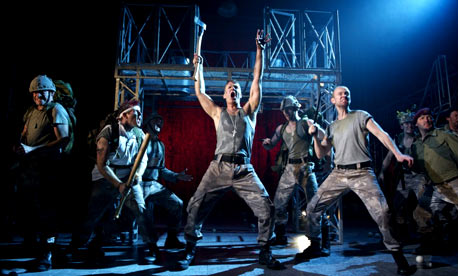
Their all-male cast present Shakespeare in such a way, that each play is given an innovative and contemporary setting but without tainting the original text and its intricate and eloquent language. Never more so was this the case than in their current production of Henry V which is charged with machismo, emphasizing physical strength, aggression and courage – quite fitting when telling the tale of one of the greatest leaders and warriors in English history and at a time when there is much attention on our troops serving abroad in Afghanistan. The sight of so many men in uniform – all extremely physically fit following their military fitness training was also enough to appeal to all of the females in the audience too!

Henry V has proven to be very popular in the past with many great actors playing the title role including Sir Richard Burton, Sir Laurence Olivier and more recently Kenneth Branagh. With such acting giants as these previously playing the title role it might have been tempting to copy some of their qualities but Propeller, in their own inimitable style have produced a Henry V unlike any other. Not only do you get superb performances in the acting, but this cast also sing and play their own musical accompaniments - and move the scenery as they go!

The staging was cleverly done, making full use of every inch of the performance area and using several props repeatedly for different scenes. I particularly liked the use of large crate lids which became the ramps on the landing crafts – reminiscent of the beach landings in Normandy during World War 2. Several scenes were visually dramatic including the fight scenes when the stage was filled with smoke and flashing light but also in the more sombre scenes when just a torch or a flame lit the actors face. The music also played a huge part in this production whether performed on or off stage to compliment the many soliloquies. Written and arranged by cast members Gunnar Cauthery and Nicholas Asbury, the harmonies were exquisite and rousing which really helped to bring out the various emotions of the play. There were also occasions when the music helped to introduce some of the lighter hearted moments of the play and my only disappointment was that we didn't get a singing performance in the interval as had been done in previous years.


The whole ensemble worked brilliantly together, a true band of brothers from which you felt a great sense of camaraderie between them. Several members of the cast played more than one part which often required a quick change of costume (and character) in the wings but was achieved with a seamless ease. There were many standout performances including; John Dougall as the French King and Duke of York, Karl Davies as “the boy” and Princess Katherine - forming an amusing sort of double act with Chris Myles as lady in waiting Alice and Tony Bell as always adding some light hearted moments in his portrayal of Mistress Quickly and Fluellen (with a brilliant welsh accent)


Dugald Bruce-Lockhart added a new dimension to King Henry in that as well as being an inspiring leader and military hero, you also saw a softer more vulnerable side when seeking the approval of his men and when mourning the dead. His delivery of the famous St. Crispin’s day speech came across as heartfelt and sincere as well as  quietly inspiring. Whilst other actors in the past have tended almost to shout out this speech as if addressing the entire audience as their troop, Dugald addressed his “happy few” in a much more sombre and quieter tone which made it feel more personal as though addressing a friend or brother and yet also gave a sense of the nervous anticipation felt at the thought of the impending battle. He also showed a great variety of emotion when seeing “the boy” dead, his sadness turned to anger and then when hearing of the number dead  a softer, humbler side as he declared that God had fought with them that day. There was also an irresistible, boyish sort of charm about him as he set about wooing Katherine which made his character even more likeable and appealing.

Propeller knows how to push the boundaries without going too far and without detracting from the original text. If you’ve never had much time for the works of Shakespeare before, then seeing them perform will change your whole perception of them.


For more details of the Propeller Theatre Company and their current tour of Henry V and The Winter’s Tale go to http://propeller.org.uk/home

Friday, 10 February 2012

Review - Behind the Scenes at the Hepworth Gallery


They say that Art is subjective in that it will mean something different to each person, indeed, ask several people how they would define art and you are likely to get many different definitions.
Art is not a subject I would claim to know a lot about, I have always enjoyed visiting art galleries and can remember being introduced to the works of Rembrandt and Van Gogh around the age of eight. I studied the Pre-Raphaelite era as part of my degree through the Open University and have always had a fondness for the Impressionist painters and what I guess might be termed traditional or classical art. When looking at paintings I like the kind that draws you into it and makes you feel part of the scene and I enjoy learning not just about the piece of art itself but the story behind it.

Last night I had the opportunity to attend a bloggers event at the Hepworth Gallery in Wakefield for a behind the scenes glimpse of their forthcoming exhibition which opens 11th February. I am ashamed to say that despite living in Wakefield for many years I had not visited the gallery since it opened in 2011. This visit therefore was a chance not just to see the gallery but also to learn more about their latest exhibition.


We were warmly welcomed by several of the curators and Simon Wallis, the director of the Hepworth Gallery. He spoke to us about the vision behind the gallery in encouraging the people of Yorkshire to embrace the arts and how they were trying to make art more accessible to people of all ages. Since its opening just 8 months ago the Hepworth Gallery has received some 385,000 visitors which is no small feat when you consider its location and the fact that all of these visitors are intentional rather than just passersby. The information in my press kit also told me that the gallery has already won several awards including The British Design Awards 2012  - Best Architectural Achievement and winner of the Conde Nast Travellers Award 2011 – Culture. It has also been nominated for the Art Fund Prize which if successful would not only afford them the prestigious title of Museum of the Year but also £100,000. For more details on this award and to vote for the Hepworth Gallery www.artfundprize.org.uk  

I was suitably impressed with the building which is very light and airy. The plain walls meant that you concentrated more on the art rather than being distracted by the decor and it complimented the art and sculptures on display, both being contemporary in design.

The new exhibition features the work of four contemporary artists; Ben Rivers, David Thorpe and Heather and Ivan Morison – using film, sculpture and installation and performance to explore our relationship to nature in the first of a series of spring exhibitions.

Knowing that the works on display were going to be of a contemporary nature, I was concerned that I wouldn’t fully understand the pieces or appreciate what the artist was trying to convey. I envisaged an Emperor’s new clothes scenario with everyone else looking on in great admiration whilst I just saw the bare materials. I was relieved therefore that we had the assistance of several curators and also two of the artists to explain their work and the inspiration behind it. As this was a behind the scenes look at the Preview, the galleries were still in the process of setting up the exhibitions which gave us the opportunity to see just how much work goes in to the opening.

The first exhibition we saw was the exhibition by David Thorpe which I liked immensely as it reminded me of William Morris and John Ruskin whose works I am familiar with. What I found interesting about the work on display was that David uses mediaeval techniques to create his work rather than mechanically mass produce it. Every piece is therefore done by hand including carving, leather cutting and painting. The exhibition includes two watercolours A Necessary Life (2011) and Revived Pattern (2010) and three sculptures Private Lives, Quiet Lives and The Collaborator (all 2010). I liked the detail of the leaves and berries and the intricacies of the carving and cutting but also enjoyed hearing how the underlying theme was that of a shield or defence. Whilst the installation of all the pieces was not quite complete it looked to be a very interesting and thought provoking exhibition.
The Collborator - David Thorpe

The next gallery we visited had been blacked out in order to showcase the award winning film made by Ben Rivers  - Slow Action. When the curator described the film as a post apocalyptic science fiction film I began to wonder just exactly what we would be seeing. The film was produced on 16mm film reel and is a combination of documentary, fiction and ethnographic study -  narrated by American writer Mark von Schlegell.

Ben was on hand to explain that the piece had been commissioned for Darwin’s 200th anniversary by Picture This who are based in Bristol. He had started his research into the project by rereading some of Darwin’s better known publications such as Voyage of the Beagle and The Descent of Man. Ben’s idea was to show how islands’ biogeographys evolve differently when isolated and surrounded by unusual habitats. Based on a concept of Earth sometime in the future when sea levels have risen creating utopias that appear as future mini societies. For his film Ben travelled to the islands of Lanzarote, a popular island known for its beach resorts and yet one of the driest places on the planet; Gunkanjima, an island off the coast of Nagasaki containing a deserted city built on the rocks and formerly the home to thousands of families mining its reserves; Tuvalu, a tiny island in the middle of the Pacific Ocean; and Somerset a fictitious island.


Whilst we did get the chance to view some of the film footage, they were still in the process of setting up the wireless headphones and sound system so we were unable to hear any of the accompanying narration. Some of the scenes on the film looked incredible but it was hard to fully appreciate it without the sound and so I am determined to go back and visit the exhibition again in order to get the full effect. It was interesting though to meet the artist and to hear about his inspiration for the piece and the work involved in putting it together.

The final exhibit was by Heather and Ivan Morison whose work also includes a large sized sculpture of a black cloud which is located in the grounds of the Hepworth Gallery. In their latest work, they use objects, puppets and narration to present a piece of object theatre that tells the tale of love in foreboding times. It is based on the life and works of British Novelist Anna Kavan.

This was perhaps the exhibition that I found the hardest to identify with despite the explanations from the curator. Whilst I did admire the craftsmanship used in many of the objects and the materials they used, I found it hard to fully understand what was being portrayed. Admittedly this exhibition was also still being put together and so many parts of it were as yet unfinished but hopefully when it is completed it will be easier to comprehend and appreciate.

Overall I had a very enjoyable evening and gained a fascinating insight into the work of the gallery and that of the individual artists; what inspires them and how they go about their creative process. If you haven’t already been to the Hepworth Gallery, I would recommend a visit – especially during this upcoming exhibition – or during the half term holidays when they are holding special events for children.

I would like to thank the staff at the Hepworth Gallery for the opportunity to attend this behind the scenes preview and also Emma Bearman for organising this event with them .

 For more information about the Hepworth Gallery and its forthcoming exhibitions  http://www.hepworthwakefield.org/